
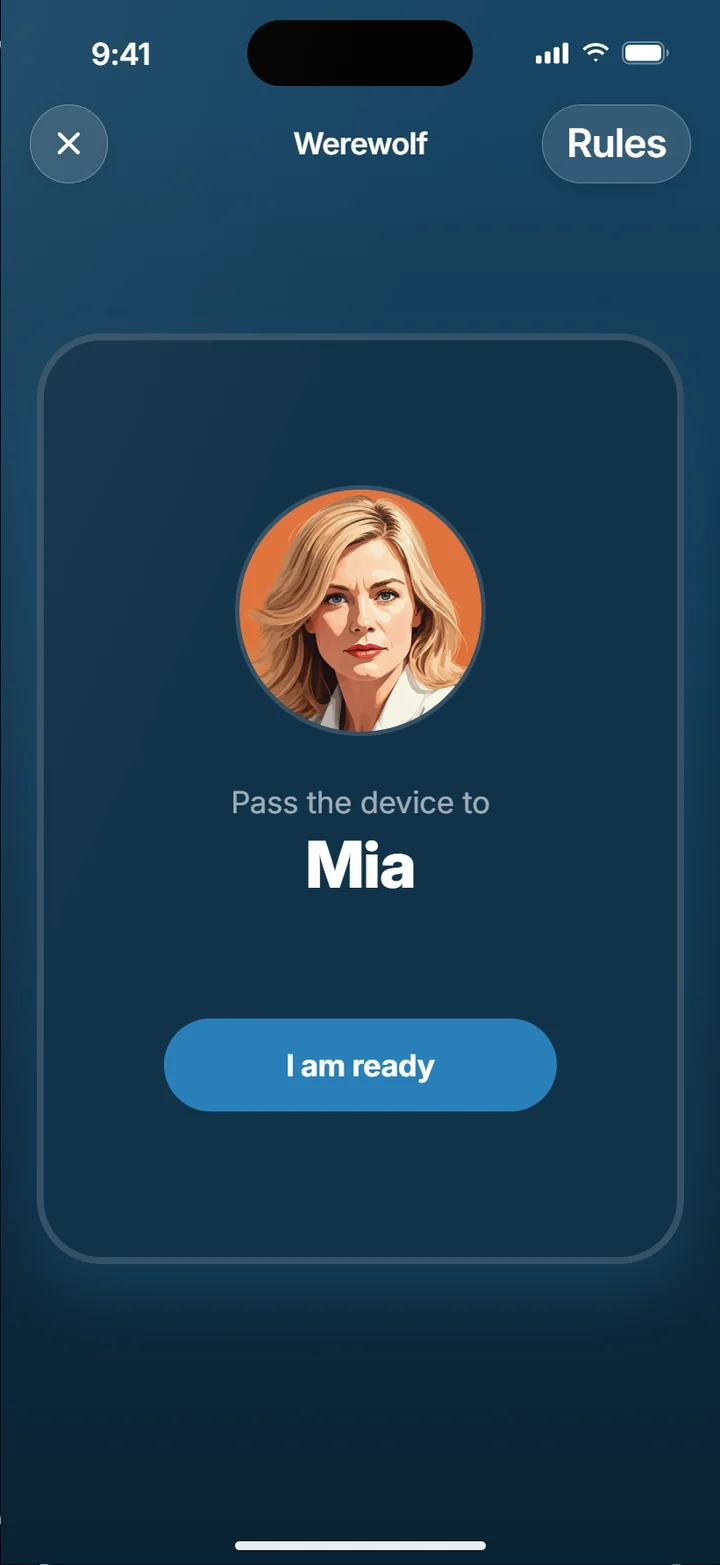
Only the current player sees their private information. Check that the next view is ready before passing the phone.
Choose a clear order
Agree which direction the iPhone will travel before the first role. Similar names should be easy to tell apart in the game. When adding the group, make sure each active person is represented once.
Read privately without making it awkward
Angle the display away from others and let waiting players look away. Read all the information without accidentally saying it aloud. If something is unclear, ask about the rules without announcing the private role.
Finish the handover deliberately
Follow the current screen’s instructions and check that private information is no longer openly visible before passing it on. Hand the device straight to the next player. Not every game uses hidden roles; open questions can be viewed together.
Handle an accidental glance fairly
If someone sees another role, mention it before play starts. Agree to restart the round if the extra knowledge would create an unfair advantage. Clarify the process rather than arguing over whether the glance was intentional.
Practise the private moment beforehand
Before assigning real roles, use a neutral view to demonstrate holding and passing the device. The next person waits until the previous player finishes. When seated closely, deliberately angle the display away from a neighbour. Someone who finds the text hard to read gets time rather than having secret information read aloud. A general question about the sequence can be answered without naming the role or word. Once everyone understands the physical handover, start with the actual private information and keep that same order.
Preserve the information state during interruptions
If someone leaves their seat during handover, pause briefly. Establish who has already read their view without revealing its contents. Let the current player complete the step before passing again. After a longer interruption, check that everyone remembers the task. A revealed word does not become secret again merely by turning the screen away. Decide openly whether to begin a suitable fresh round. This gives everyone the same starting point instead of asking one player to pretend they never saw information that can influence their choices.
Distinguish open views from private ones
In a conversation game, everyone may see the same question. In a role game, the identical phone position might expose private information. Adapt handover to the current game and screen instead of repeating one gesture mechanically for every title. Before switching, explain what can now be visible together. For a rule or device question, use the relevant guide, while treating it as reading help rather than a second live role view. Knowing who should see a screen is part of the preparation, not merely device etiquette.
Your quick check
- Passing order is clear.
- Names are easy to distinguish.
- Private information is viewed individually.
- Accidental glances are mentioned before starting.
Common questions about this topic
Does each player need an account?
No. The group plays on one shared iPhone; nobody else needs to install the app.
Does every game have secret roles?
No. Open questions, knowledge games and challenges have different sequences. Read the selected game’s rules.